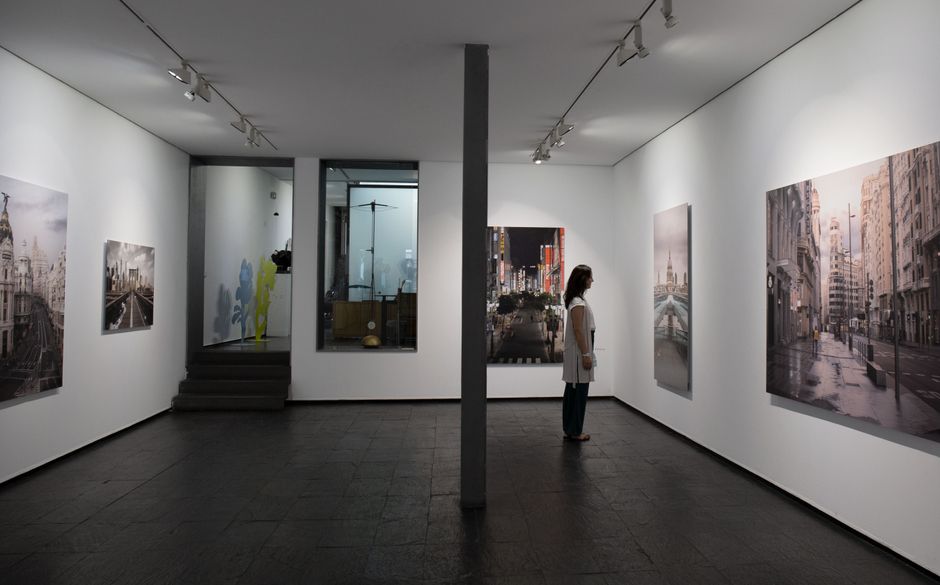
Walk down Calle de Fuencarral on a Thursday evening and you'll encounter something that would have seemed impossible a decade ago: queues stretching around the block for gallery openings, not museum blockbusters. Madrid's contemporary art scene has undergone a profound metamorphosis, one that's fundamentally reshaping how the city sees itself—no longer as the guardian of Spain's Golden Age, but as a living laboratory of creative possibility.
The shift is geographical as much as philosophical. While the Prado, Reina Sofía, and Thyssen-Bornemisza remain pillars of Madrid's cultural infrastructure, the gravitational centre of artistic innovation has migrated eastward into neighbourhoods like Malasaña, Lavapiés, and the rapidly transformed Arganzuela district. Here, independent galleries and artist-run spaces have proliferated with remarkable velocity. Contemporary Art projects, smaller commercial galleries, and non-profit initiatives have collectively created what local curators now call the "distributed museum"—a network of spaces that collectively outnumber traditional institutions.
The numbers tell a compelling story. Madrid now hosts approximately 320 active art galleries, a 47 per cent increase since 2019, according to the Madrid Gallery Association. Annual visitor numbers to independent contemporary galleries exceeded 1.8 million in 2025, a threshold that reflects genuine cultural appetite rather than tourist reflexivity. Admission prices—typically free to €8 for independent spaces—have democratised access in ways the major museums, despite their relative affordability, have not.
This transformation carries profound implications for Madrid's self-conception. The city spent centuries as Spain's cultural custodian, its identity locked in amber by masterworks and royal collections. Today's galleries—spaces like those clustered around Plaza del Dos de Mayo in Malasaña or the emerging experimental venues in Atocha—are constructing a different narrative. They're asking not "what did we create?" but "what do we create now?" They're amplifying Spanish and Latin American voices often marginalised in canonical spaces. They're embracing multimedia, performance, and activist art that challenges rather than comforts.
This isn't competition with the major institutions so much as complementarity. The Reina Sofía's recent programming increasingly engages with contemporary practitioners. Yet the energy, the genuine sense of artistic ferment, now belongs to the distributed network. Young Madrileños increasingly define their city through these spaces rather than through heritage narratives.
As Madrid positions itself within global conversations about artistic practice, sustainability, and social responsibility, its gallery ecosystem has become the primary vehicle for that dialogue. The city isn't abandoning its past; it's finally learning to speak fluently in the present.
This article was compiled by AI from the sources linked above and screened before publishing. See our editorial standards.