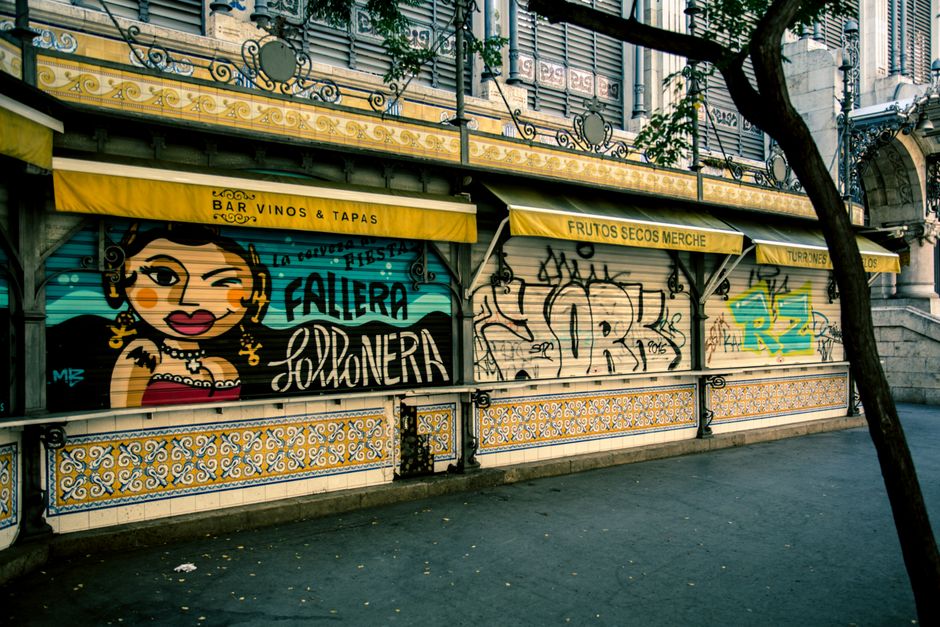
Walk down Calle de la Palma on a Saturday morning, and you'll witness Madrid's most radical cultural shift in a generation. What once was a neglected industrial corridor now pulses with colour—sprawling murals depicting everything from abstract geometry to social commentary cover every available surface. This isn't gentrification dressed in progressive clothing. It's a deliberate, community-led movement that's fundamentally reshaping how Madrid sees itself.
The transformation of Malasaña, Lavapiés, and increasingly Chamberí represents something far more significant than aesthetic renovation. Since 2022, over 40 independent collectives and artist networks have organised themselves to reclaim public space, with groups like ColaBoradores and Muros Tabú leading weekend painting sessions that attract hundreds of participants. These aren't sanctioned events—or at least, not initially. The movement has forced municipal authorities to recognise street art as legitimate urban design, not vandalism.
"What's happening here challenges the traditional gallery system," says the neighbourhood itself, through its walls. The average cost of a commercial gallery opening in central Madrid hovers around €400,000 annually. By contrast, street art requires only paint, permission (increasingly granted), and community coordination. This democratisation has proven irresistible to emerging artists priced out of Spain's conventional art market.
The numbers tell a compelling story. Malasaña's property values have risen 28% since 2023, yet the neighbourhood has resisted becoming a homogenised cultural theme park. Local businesses—independent bookshops, vintage cafés, design studios—thrive alongside the street art infrastructure. Calle del Espíritu Santo now hosts three permanent artist collectives working from converted warehouse spaces, each charging membership fees of €80-120 monthly.
What distinguishes Madrid's movement from similar efforts elsewhere is its explicit rejection of corporate sponsorship. While international cities increasingly see street art co-opted by brands, Madrid's collectives have maintained strict autonomy. The recent rejection of a major energy company's proposal to sponsor a mural series in Lavapiés demonstrated the movement's commitment to grassroots principles.
The real innovation lies in institutional adaptation. The Museo Reina Sofía now regularly collaborates with street artists for public programmes, while the city council's 2025 Urban Creativity Initiative allocated €2.3 million for neighbourhood-led mural projects. These represent unprecedented recognition of street art as essential to Madrid's cultural identity.
As June fades into summer, Madrid's streets continue their conversation with residents. The movement isn't about making neighbourhoods picturesque for tourists—it's about whose voice gets heard in shaping urban culture. In that struggle, the walls have finally found their voice.
This article was compiled by AI from the sources linked above and screened before publishing. See our editorial standards.