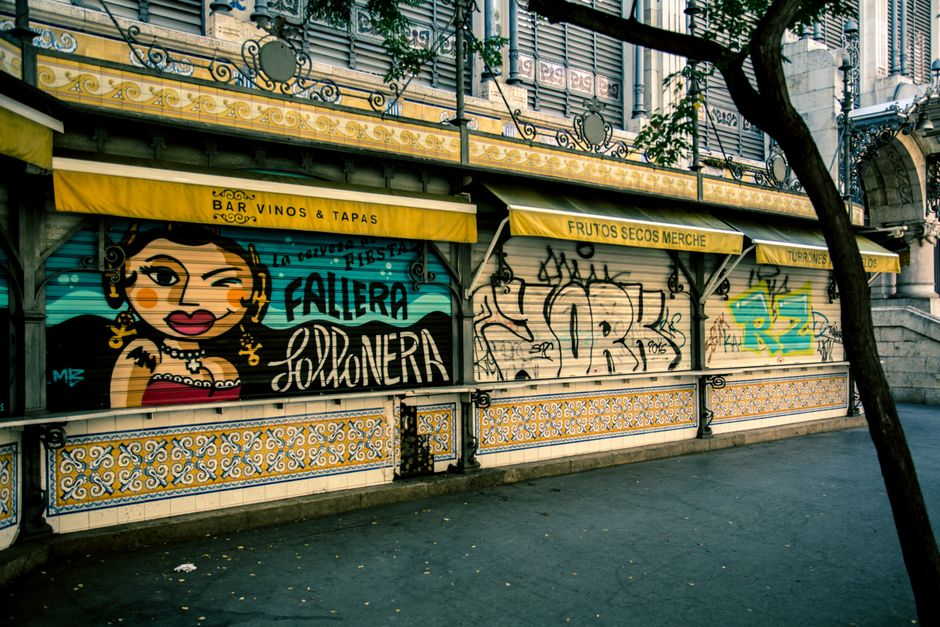
Walk down Calle del Espíritu Santo in Malasaña on any given morning, and you'll encounter a living archive of Madrid's evolving soul. Towering murals depicting everything from abstract geometric patterns to hyper-realistic portraits of cultural icons cover nearly every available surface. This isn't accidental decoration—it's become the unofficial visual language of a city wrestling with its identity in 2026.
The transformation of Madrid's street art districts over the past five years represents something far deeper than aesthetic renewal. Malasaña, Chueca, and increasingly Lavapiés have become the primary stages where the city's creative class negotiates belonging, resistance, and belonging. Where once these neighborhoods were dismissed as bohemian fringe, they're now recognized as cultural bellwethers that attract international galleries, design studios, and younger Madrileños seeking alternatives to the Salamanca establishment.
The numbers tell a revealing story. According to the Madrid Chamber of Commerce, creative sector businesses in these districts grew by 34% between 2022 and 2025, with street art-adjacent industries—design agencies, independent galleries, artist collectives—accounting for nearly half that expansion. Rental prices have predictably followed, with commercial spaces on Calle de la Palma in Malasaña now commanding €2,500-3,200 monthly, up from €1,400 just four years ago.
Yet the cultural significance extends beyond real estate metrics. Organizations like La Tabacalera de Lavapiés and the collective Muros Tabú have pioneered models where street art functions as genuine community dialogue rather than corporate branding exercise. These spaces have become incubators for conversations about gentrification, migration, and Madrid's relationship with its own multicultural present—conversations the city's traditional cultural institutions were slow to engage.
The municipal government's cautious embrace of these districts—formalized through the 2024 Creative Districts Initiative—reflects a broader recognition that street art has ceased being marginal. The city now officially designates certain walls as sanctioned canvases while maintaining grey zones where semi-legal work flourishes. This pragmatism, however controversial among purists, has paradoxically preserved the rawness that makes these spaces vital.
For younger Madrileños especially, these creative districts represent an authenticity that the city's classical heritage and corporate leisure zones increasingly cannot. When a teenager from the suburbs can see their neighborhood reflected in a mural by a local artist rather than a imported celebrity name, cultural identity becomes less abstract, more visceral.
As gentrification pressures continue mounting, the question isn't whether Madrid's street art will survive—it will. The question is whether it will retain the democratic, generative spirit that currently defines it, or become another commodified cultural product for consumption.
This article was compiled by AI from the sources linked above and screened before publishing. See our editorial standards.