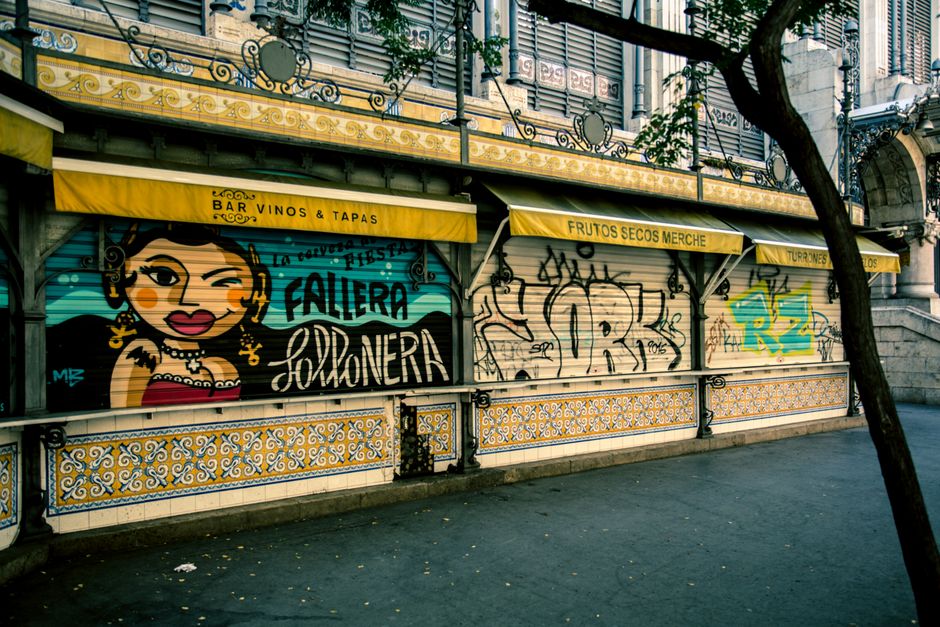
Walk down Calle Fuencarral on any given afternoon and you'll encounter a living museum. Towering above the vintage shops and independent cafés, cascading murals in electric blues and burnt oranges cover entire building facades. But these aren't spontaneous expressions of teenage rebellion—they're the result of a carefully orchestrated creative movement that took root in Madrid's most bohemian districts roughly fifteen years ago.
The transformation began quietly in Malasaña around 2010, when a loose collective of Spanish and international artists started approaching property owners about legal wall space. "The key was always permission," explains the Asociación de Vecinos de Malasaña, whose records document the early negotiations that would become the neighbourhood's calling card. Where illegal tags once dominated, formalized mural projects emerged, attracting both established artists like Okuda San Miguel and emerging talents tired of the Paris and Berlin street art circuits.
By 2018, Chueca had followed suit. The neighbourhood's LGTBQ+ community and local business associations recognized street art as a tool for cultural identity and tourism revival. Investment followed: the Fundación Arranz-Bravo began commissioning pieces; galleries like La Galería Estampa started bridging street art and fine art markets. Today, a single mural can command €3,000 to €8,000 depending on the artist's profile and wall dimensions.
The economics matter. Street art tourism now contributes an estimated €12 million annually to Madrid's creative economy. Guided tours departing from Plaza Mayor cost €18 per person, many specifically routing through Malasaña's 47-block mural corridor. Young artists who once faced police fines now run studios in converted warehouses along Calle Velarde, teaching workshops to tourists and selling limited-edition prints.
Yet success brings complications. Gentrification has displaced many original residents and artists; studio rents in Malasaña have quadrupled since 2015. Purists argue that legitimized street art, however visually stunning, loses its transgressive spirit. The city council's 2024 Heritage Committee debates whether to preserve specific murals as protected cultural assets—a certification that would lock pieces in place indefinitely.
What's undeniable is the human texture beneath the paint. These districts work because they reflect the people who fought for them: queer communities, immigrant communities, and artists who recognized that urban space is political. The murals are stunning, yes. But they're secondary to the story of how ordinary Madrileños reclaimed their neighbourhoods, one wall at a time.
This article was compiled by AI from the sources linked above and screened before publishing. See our editorial standards.