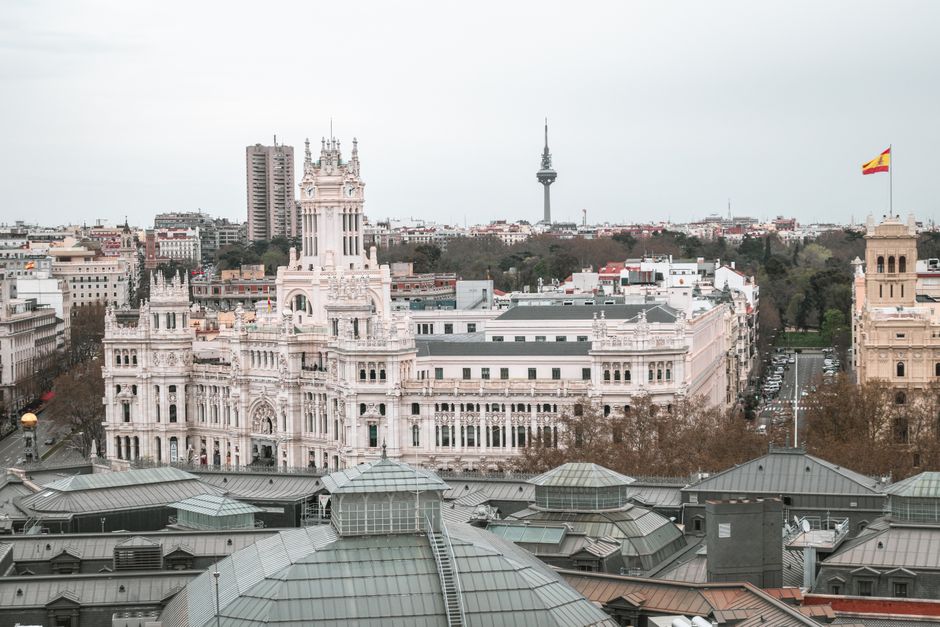
Madrid has quietly become Europe's most distinctive remote work destination—not because of cheap office space or tax breaks, but because it solved a paradox that Silicon Valley never could: how to maintain a world-class tech ecosystem while fundamentally rejecting always-on work culture.
The shift accelerated dramatically post-pandemic. Today, nearly 62% of Madrid's tech workforce engages in hybrid or fully remote arrangements, according to 2025 data from the Madrid Chamber of Commerce. That's substantially higher than Berlin (48%) or London (51%), and it's reshaping where companies choose to headquarter their European operations.
The infrastructure underpinning this lies in unexpected places. Along Calle de Alcalá and in the sprawling Chamberí district, coworking operators like Spaces and The Heden have evolved beyond desk rental into genuine community anchors. Monthly membership runs €350-550—competitive with Barcelona but undercut by London's £600+ norm—yet the spaces function as unofficial networking hubs where remote workers from Telefónica spin-offs, fintech startups, and EU-funded AI labs collide organically.
What distinguishes Madrid's approach is cultural rather than infrastructural. Spanish labour law mandates a genuine 40-hour week; the 15-hour daily email avalanche that defines tech elsewhere is viewed here as managerial failure. Companies like Typeform and N26, which maintain significant Madrid operations, credit this ethos with attracting talent exhausted by Silicon Valley's performative overwork.
The city's geographic positioning compounds this advantage. Madrid sits within a four-hour flight radius of 200 million Europeans, making it the logical bridge between North African and Middle Eastern markets and Western Europe's regulatory framework. For US tech firms navigating EU compliance requirements—particularly post-AI Act implementation—Madrid's trilingual talent pool and proximity to Brussels policy circles offer clear advantages over geographically peripheral hubs.
Real estate economics matter too. Office space in central Madrid's Salamanca neighbourhood averages €35-45 per square metre monthly, roughly half Barcelona's premium districts. This cost advantage allows startups to maintain flexible office footprints—a Spanish startup might rent 800 square metres for thirty remote workers, rather than shoebox desks for everyone present daily.
By 2026, three major European tech corporations have announced Madrid-based distributed hubs specifically designed around async-first operations. They're not relocating from London or Berlin; they're building parallel infrastructure here because Madrid's ecosystem makes remote-first actually work culturally.
The city hasn't disrupted tech by chasing disruption. It disrupted tech by doing something radical: letting people work reasonably.
This article was compiled by AI from the sources linked above and screened before publishing. See our editorial standards.