wellness
Walking Meditation: How to Turn Your Daily Walk Into Mindfulness
Madrid's parks and river paths offer some of Europe's best terrain for the ancient practice gaining serious traction among urban stress researchers.
How we reported this
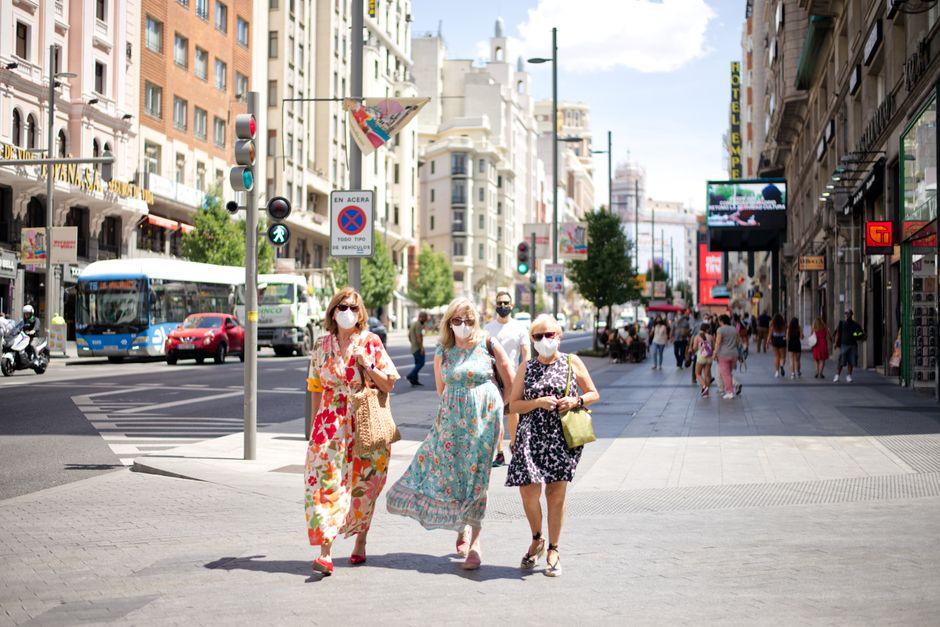
The morning crowd filtering into Retiro Park before 8 a.m. on a weekday is not, for the most part, moving fast. Some are jogging. Many are not. A growing number are doing something that looks, from the outside, almost like nothing, walking slowly, deliberately, without headphones, without phones in hand. They are practising walking meditation, and mental health professionals across Madrid say the uptake is real and measurable.
Mindfulness research has exploded over the past decade, but a specific strand of that conversation has sharpened recently: the idea that formal seated meditation is not the only entry point, and may not even be the most sustainable one for people managing busy urban lives. Walking meditation, a structured practice rooted in Buddhist Vipassana tradition but now thoroughly secularised and studied in clinical settings, offers an accessible alternative. You do not need a cushion, a studio, or silence. You need a path.
Why Madrid Is Particularly Well-Suited
This city has the infrastructure almost by accident. The Madrid Río corridor, the 10.5-kilometre linear park running along the Manzanares river from the Puente de Segovia south toward Legazpi, was designed as a cycling and leisure route when it opened fully in 2011. It has become, unintentionally, one of the finest walking meditation circuits in southern Europe. The path is largely flat, lined with plane trees that filter the afternoon glare, and divided clearly enough from cycling lanes that a slow, deliberate pace does not obstruct anyone.
Retiro Park's less-trafficked interior paths, particularly the circuit around the Jardín de los Planteles, near the park's northern Puerta de Felipe IV entrance on Calle Alfonso XII, offer a similar quality of environment: dappled shade, consistent ambient sound from fountains and birdsong, and enough repetitive visual texture to anchor attention without demanding it. Both locations are free to access every day of the year.
Several Madrid-based mindfulness organisations have begun formally incorporating walking routes into their programmes. Centro Mindfulness Madrid, based in the Malasaña neighbourhood on Calle Fuencarral, runs an eight-week Mindfulness-Based Stress Reduction course, the MBSR protocol developed by Jon Kabat-Zinn at the University of Massachusetts in 1979, that dedicates one full session specifically to outdoor walking practice. The course costs approximately €350 for the full programme as of this year, and places for the September cohort are already limited.
How to Actually Do It
The mechanics are straightforward, though practitioners are quick to note that straightforward is not the same as easy. Choose a route you know well enough that navigation requires no mental effort, familiarity is an asset here, not a drawback. Walk at roughly half your normal pace. Direct attention to the physical sensation of each footfall: the heel making contact, the weight rolling forward, the toe lifting. When the mind drifts, to the afternoon meeting, to the grocery list, to whatever is streaming on every other Madrileño's earbuds, notice that it has drifted and return attention to the feet.
A 2023 meta-analysis published in the journal Frontiers in Psychology, drawing on 27 separate studies and more than 2,000 participants, found that walking meditation produced statistically significant reductions in both anxiety and rumination compared to ordinary walks of equivalent duration. The effect size was modest but consistent across age groups, which matters for a city like Madrid where outdoor walking culture spans generations, from retirees doing their midmorning vuelta around the Barrio de Salamanca to office workers cutting through Gran Vía at lunch.
The Mediterranean diet gets considerable attention as a pillar of Spanish wellbeing. The outdoor social culture gets rather less credit than it deserves as a mental health asset. Walking meditation asks you to take something already embedded in daily Madrid life and layer a single additional quality onto it: intentional attention. No app required, though Centro de Mindfulness España does offer a free Spanish-language guided audio for beginners on its website if structure helps at the start.
Anyone managing a diagnosed anxiety disorder, depression, or other clinical condition should speak with their GP or a psychologist, mindfulness is a complement to professional care, not a replacement for it. For everyone else, the Manzanares is right there, the shade is free, and July mornings before nine o'clock are still bearable. The practice is simpler than you think. Starting is the only complicated part.