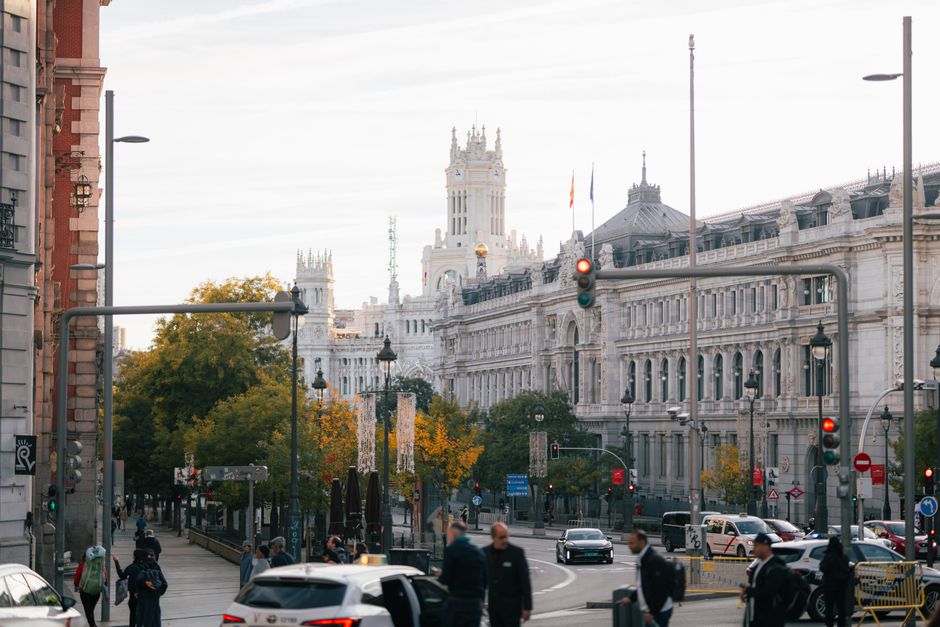
Walking through the Paseo de la Castellana on a Tuesday morning, the absence is striking. Office buildings that once hummed with activity now operate at 60-70% capacity. This isn't economic decline—it's structural transformation reshaping Madrid's entire employment landscape.
Three years after the initial shift to remote work, Madrid's job market has fundamentally reorganised itself. Companies across the capital—from multinational headquarters in the Cuatro Torres Business Area to mid-sized tech firms clustered around Malasaña and Chueca—are now competing not just with Madrid-based rivals, but with employers across Europe and Latin America for the same talent pool.
The consequences are profound and contradictory. Premium sectors like finance, consulting, and technology firms have broadened their hiring scope dramatically. A software engineer in Madrid can now negotiate salaries comparable to Barcelona or lisbon roles, yet accept a three-day office requirement instead of daily commutes. Meanwhile, hospitality, retail, and logistics companies concentrated in Madrid's commercial districts struggle to attract workers who've discovered they can earn comparable wages while living in smaller towns with cheaper housing.
Real estate data reflects this tectonic shift. Commercial office space in prime locations like the Plaza de Castilla has seen rental rates plateau or decline, while flexible co-working spaces in accessible areas like Gran Vía and Atocha have expanded aggressively. Property consultants report companies reducing their square-meter footprints by 30-40%, reallocating budgets toward employee experience amenities rather than assigned desks.
The talent flight phenomenon is particularly acute. Madrid's younger workforce—particularly those in knowledge-intensive roles—increasingly view the capital as a launching pad rather than destination. Madrid's unemployment rate remains competitive at 11.2% (below the national average), but underemployment in knowledge sectors has risen sharply as overqualified workers settle for roles that don't utilise their full capabilities, unable to negotiate the premium that full relocation to Barcelona or abroad might demand.
For employers, the adjustment period continues. Traditional Madrid institutions—banks headquartered on Paseo de Recoletos, insurance firms around Plaza Mayor—have adapted reluctantly, implementing hybrid policies only when competitor poaching became unsustainable. Meanwhile, newer firms and multinationals embracing geographic flexibility are capturing disproportionate talent.
The real winners, paradoxically, are workers in hybrid-friendly sectors willing to remain in Madrid. They've gained negotiating power their predecessors never possessed. For the city's economy, however, the transition presents genuine challenges: fewer daily commuters mean reduced spending at Retiro-area restaurants, while reduced office density threatens the clustering effects that made Madrid's business ecosystem so dynamic.
Madrid remains Spain's employment engine. But the nature of that engine has fundamentally shifted—and the city is still adjusting to what comes next.
This article was compiled by AI from the sources linked above and screened before publishing. See our editorial standards.