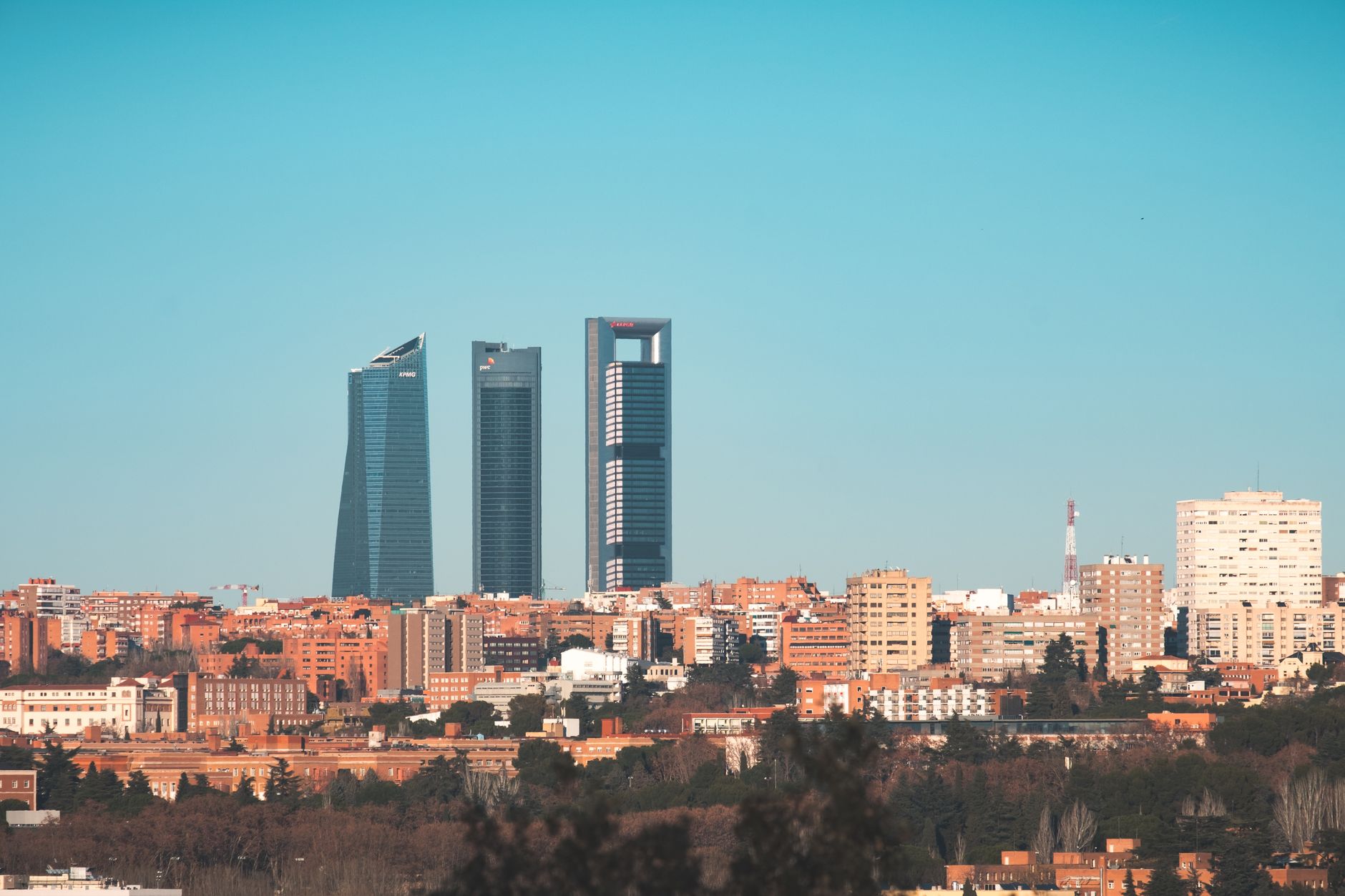
Madrid's commercial property market is sending mixed signals that reveal more about global investment psychology than Spanish economic weakness. While headlines scream recession warnings, international capital continues flowing into prime office locations—a paradox worth understanding if you're tracking where money actually moves versus where sentiment goes.
The numbers tell a curious story. Prime office space along Paseo de la Castellana, traditionally the city's financial spine, has seen yields compress to 3.8-4.2 percent, down from 4.5 percent two years ago. That compression reflects increased demand, not increased confidence in rents—a crucial distinction. Investment volume in Madrid's core commercial districts totalled €1.2 billion in the first half of 2026, roughly in line with five-year averages, according to market data from major property advisors tracking Spanish real estate flows.
What's changed is the type of investor. Sovereign wealth funds and large European pension schemes have become aggressive buyers, particularly in trophy assets around Plaza Castilla and the Chamberí neighbourhood. These institutions aren't chasing yield spikes; they're locking in stable, long-duration income streams denominated in euros while interest rates remain elevated elsewhere globally. A 4 percent yield on a Madrid office building looks increasingly attractive when comparable London or Frankfurt assets fetch 3.2-3.5 percent.
Secondary markets tell a different story entirely. Neighbourhoods like Salamanca and Retiro are experiencing genuine flight risk. Office vacancy rates in these areas have climbed to 18-22 percent, up sharply from 12 percent eighteen months ago. This matters because it signals a real structural shift: companies are consolidating headquarters toward Paseo de la Castellana rather than spreading across traditional business districts.
The investment flow pattern suggests something specific about how capital markets read economic signals. Foreign investors appear to be distinguishing between Spanish economic headwinds—which are real—and Madrid's role as an international financial hub. The city's position as headquarters for major banking groups, real estate firms, and energy companies creates a structural demand floor that individual company weakness doesn't necessarily pierce.
What institutional investors are really buying is stability in currency and political risk. A Madrid office lease generating euros in a eurozone member state offers something increasingly valuable: predictability in an unstable global environment. Economic indicators show Spanish GDP growth has decelerated, yet commercial property remains a relative safe haven for capital that might otherwise chase higher yields in riskier jurisdictions.
For anyone reading Madrid's commercial market, the lesson is this: investment flows don't always follow headline economic sentiment. They follow risk-adjusted returns and capital preservation logic—currently pointing toward continued selective investment in Madrid's premium office corridors, regardless of what broader recession fears suggest.
This article was compiled by AI from the sources linked above and screened before publishing. See our editorial standards.