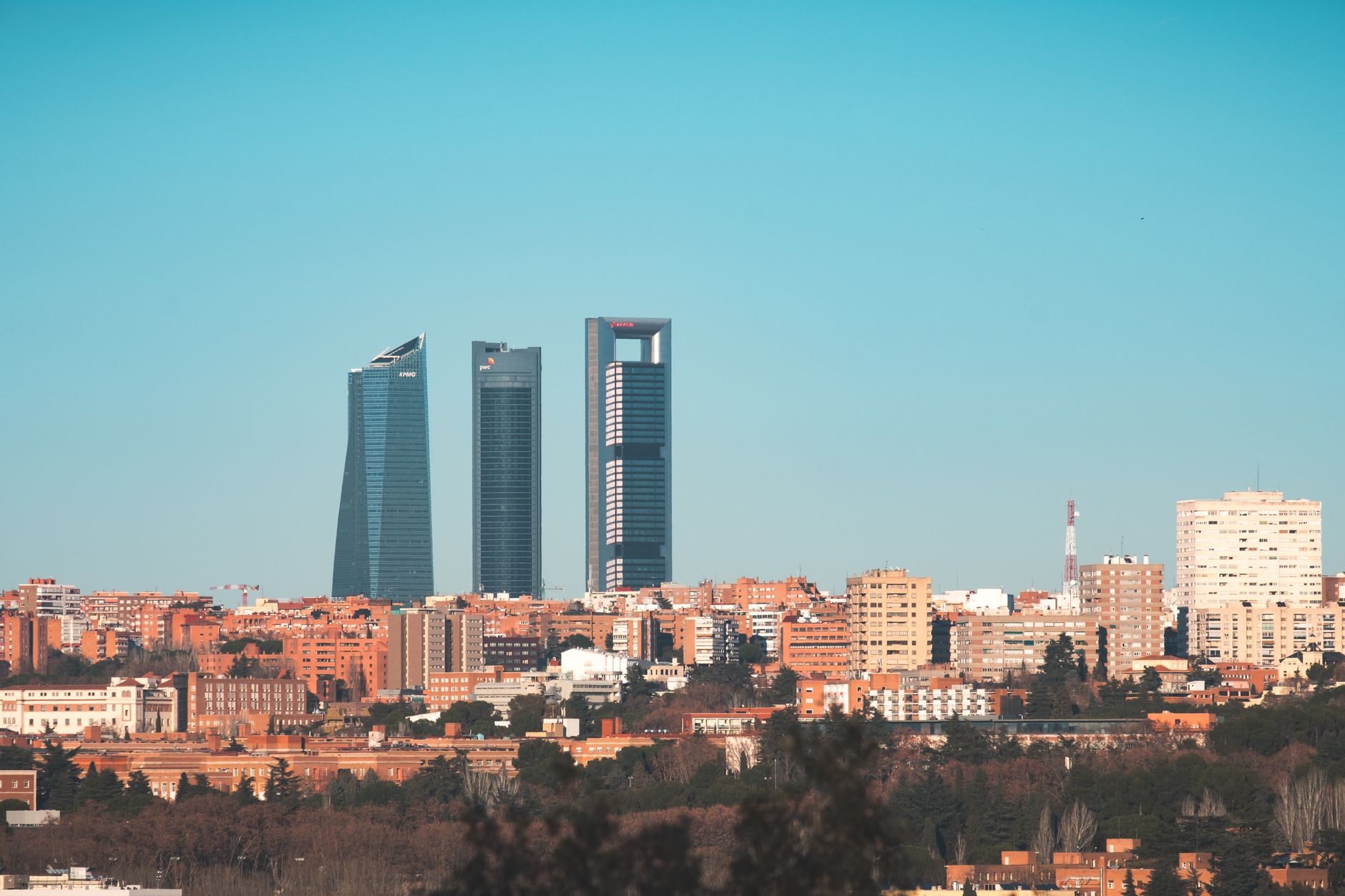
Walk through the corridors of Madrid's four-four tower blocks in Chamberí or peer into the glass-fronted office parks along Paseo de la Castellana, and you'll notice something striking: vacancy rates have climbed to levels not seen since 2020. Yet unemployment in the capital remains stable at around 11.2%, a paradox that reveals a fundamental reshaping of how Madrid's labour market operates.
The shift is driven by a sustained wave of remote and hybrid work adoption that's fundamentally altered where jobs exist and where workers are willing to live. According to a recent survey by the Madrid Chamber of Commerce, 58% of mid-sized tech and financial services firms now operate on hybrid schedules, up from 34% in 2022. That flexibility has triggered a migration pattern that's redrawing Madrid's economic geography.
"We're seeing talent dispersal that would have been unimaginable five years ago," says the hiring director at a major fintech operating from an office complex near Atocha station. Workers are no longer tethered to expensive central districts. Property prices in neighbourhoods like Leganés and Alcalá de Henares—once considered dormitory towns—have risen 16% and 12% respectively over two years, driven partly by workers seeking affordable housing while maintaining Madrid-based salaries.
This dispersion is reshaping recruitment entirely. Entry-level salaries for software engineers in Madrid have plateaued around €32,000 annually, despite tight talent pools elsewhere in Europe. Employers argue that remote flexibility has expanded their candidate pool beyond Madrid's city limits, reducing wage pressure. Conversely, senior talent increasingly demands location flexibility as a core benefit, not a perk.
The impact ripples through neighbourhoods. Spaces around Metro stations in peripheral areas now host co-working hubs; the concentration of business activity is no longer synonymous with proximity to Sol or Plaza de Castilla. Office vacancy in the prime Paseo de la Castellana corridor has jumped to 18%, while smaller, distributed workspace in residential areas is absorbing demand.
For Madrid's economy, the implications are mixed. Tax revenues remain strong—remote workers still pay municipal levies—but the city's traditional cluster advantage is eroding. Real estate investment trusts focused on premium office space face pressure, while logistics and hospitality around suburban transport nodes gain unexpected momentum.
As of mid-2026, the Madrid job market is no longer a centralised attraction anchored to iconic addresses. It's becoming a networked landscape where a developer in Getafe or a strategist in Torrejón de Ardoz can access city-level opportunities without the cost or commute. That represents progress in affordability and work-life balance, but it also signals a subtle power shift: Madrid's competitive advantage no longer lies in its gravitational pull alone.
This article was compiled by AI from the sources linked above and screened before publishing. See our editorial standards.