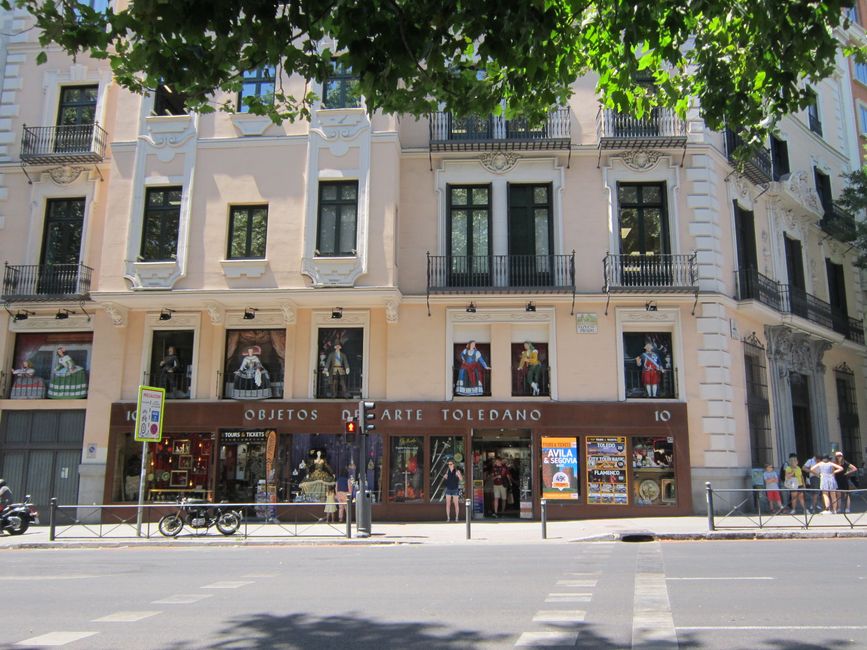
Walk down Calle de los Mancebos in La Latina on a Tuesday morning, and you'll find María Rodríguez bent over a workbench, her hands moving with practiced precision as she cuts and stitches bespoke leather goods. At 41, Rodríguez represents a rare breed in Madrid's increasingly gentrified old quarter: a business owner whose roots run deeper than the neighbourhood's current real estate boom.
What began as her grandfather's cobbling workshop in 1962 has evolved into a €480,000-a-year operation spanning two locations—the original atelier in La Latina and a second showroom on Calle Relatores, near Plaza Mayor. Yet the core business remains decidedly hands-on. Rodríguez and her team of five produce made-to-order leather journals, satchels, and bespoke accessories, with commission waiting lists extending four months.
"The market for mass-produced goods is saturated," Rodríguez explained during a recent visit to her workshop, its walls lined with heritage leather samples and vintage tools passed down through three generations. "But Madrid's professionals—architects, lawyers, executives—they're willing to invest in something that will last decades. That's our niche."
The numbers bear this out. Since pivoting toward custom luxury goods in 2019, Rodríguez's business has grown 34 percent year-on-year, with approximately 60 percent of revenue now coming from corporate clients requiring bespoke portfolios and branded gifts. Tourist-oriented souvenir sales have declined to just 15 percent of turnover, a deliberate repositioning that has insulated the business from Madrid's volatile visitor economy.
Her success comes amid broader challenges facing traditional craftspeople in central Madrid. Commercial rents in La Latina have tripled since 2010, now averaging €3,200 monthly for modest retail spaces. At least eight family-run artisanal businesses have shuttered in the neighbourhood over the past three years, replaced by restaurants and hotels catering to the 2.3 million annual tourists visiting the area.
Yet Rodríguez has managed to retain her original location through a combination of long-term lease protections negotiated by her father in the 1990s and strategic partnerships—she now supplies leather components to several established Madrid design studios, creating stable B2B revenue streams.
"People ask me why I don't just franchise or move production to cheaper markets," Rodríguez said. "But this business only works because of the relationship with clients, the ability to iterate on designs, to maintain quality. That requires staying here, in this neighbourhood, doing the work ourselves." It's a philosophy that, in 2026 Madrid, feels increasingly countercultural—and increasingly valuable.
This article was compiled by AI from the sources linked above and screened before publishing. See our editorial standards.