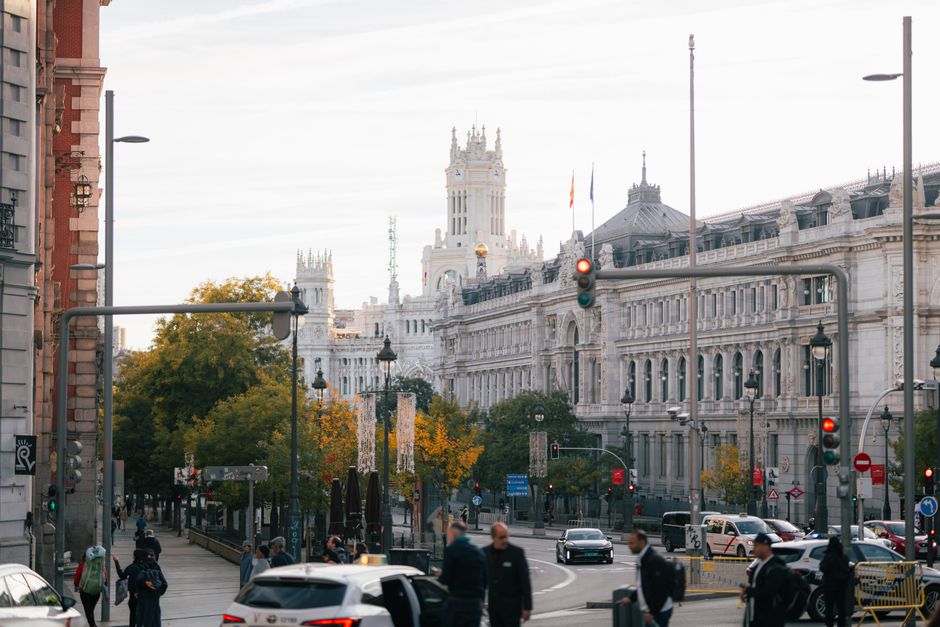
Madrid's hospitality sector faces labour exodus as ...
Rising investment in technology and upmarket dining are creating fewer but better-paid jobs, leaving thousands of traditional workers scrambling to retrain.
Rising investment in technology and upmarket dining are creating fewer but better-paid jobs, leaving thousands of traditional workers scrambling to retrain.

Madrid's retail, hospitality and food sectors are undergoing a profound transformation that is fundamentally altering the region's employment map. As establishments across Sol, Malasaña and the upmarket Salamanca district invest heavily in digital ordering systems, self-checkout technology and kitchen automation, traditional entry-level positions are vanishing faster than tapas at a Saturday night terrace.
The shift reflects broader European trends but carries particular weight in a city where hospitality accounts for roughly 12% of employment. According to recent data from the Madrid Chamber of Commerce, establishments on Calle de Preciados and in Gran Vía are reporting a 23% reduction in front-of-house staff over two years, even as customer footfall remains robust. Simultaneously, demand for specialist roles—sommeliers, data analysts managing inventory systems, and kitchen technicians—has surged by 31%.
The story is most acute in the food sector. Fine dining venues like those clustering near Plaza Mayor are increasingly seeking staff with hospitality management degrees or culinary qualifications, with entry-level wages rising from €1,100 to €1,400 monthly—but positions available have halved. Meanwhile, traditional neighbourhood bars in Chueca report struggling to find workers willing to accept the €950-€1,050 range that these smaller establishments can afford.
"We're seeing a bifurcation," explains a spokesperson for the Asociación de Hostelería de Madrid. "Premium venues become talent magnets. Neighbourhood places get squeezed." That dynamic is forcing younger workers—historically Madrid's hospitality backbone—to either upskill or exit the sector entirely.
Retail tells a parallel story. Department stores and fashion chains on Paseo de Castellana have consolidated staff, replacing floor workers with checkout supervisors who understand payment technology and data systems. Independent retailers in Barrio de las Letras report struggling particularly acutely, with foot traffic down 8% year-on-year and profit margins compressed by wage inflation.
The employment council estimates Madrid needs to retrain 4,000 hospitality workers annually just to match skill requirements. Vocational programmes run by institutions like the Instituto de Formación Profesional on Calle Alcalá are at capacity, with waiting lists extending into 2027.
For the city's labour market, the implications are stark: fewer total jobs, but those remaining increasingly demand qualifications and experience. The precarious, flexible work that sustained thousands of madrileños is evaporating—a trend likely to accelerate as automation becomes cheaper and competitive pressures intensify.
This article was compiled by AI from the sources linked above and screened before publishing. See our editorial standards.
How does this story make you feel?
Spread the word
About this article
Published by The Daily Madrid
Daily brief
Free, in your inbox before 7am. Weekdays.
More in Business