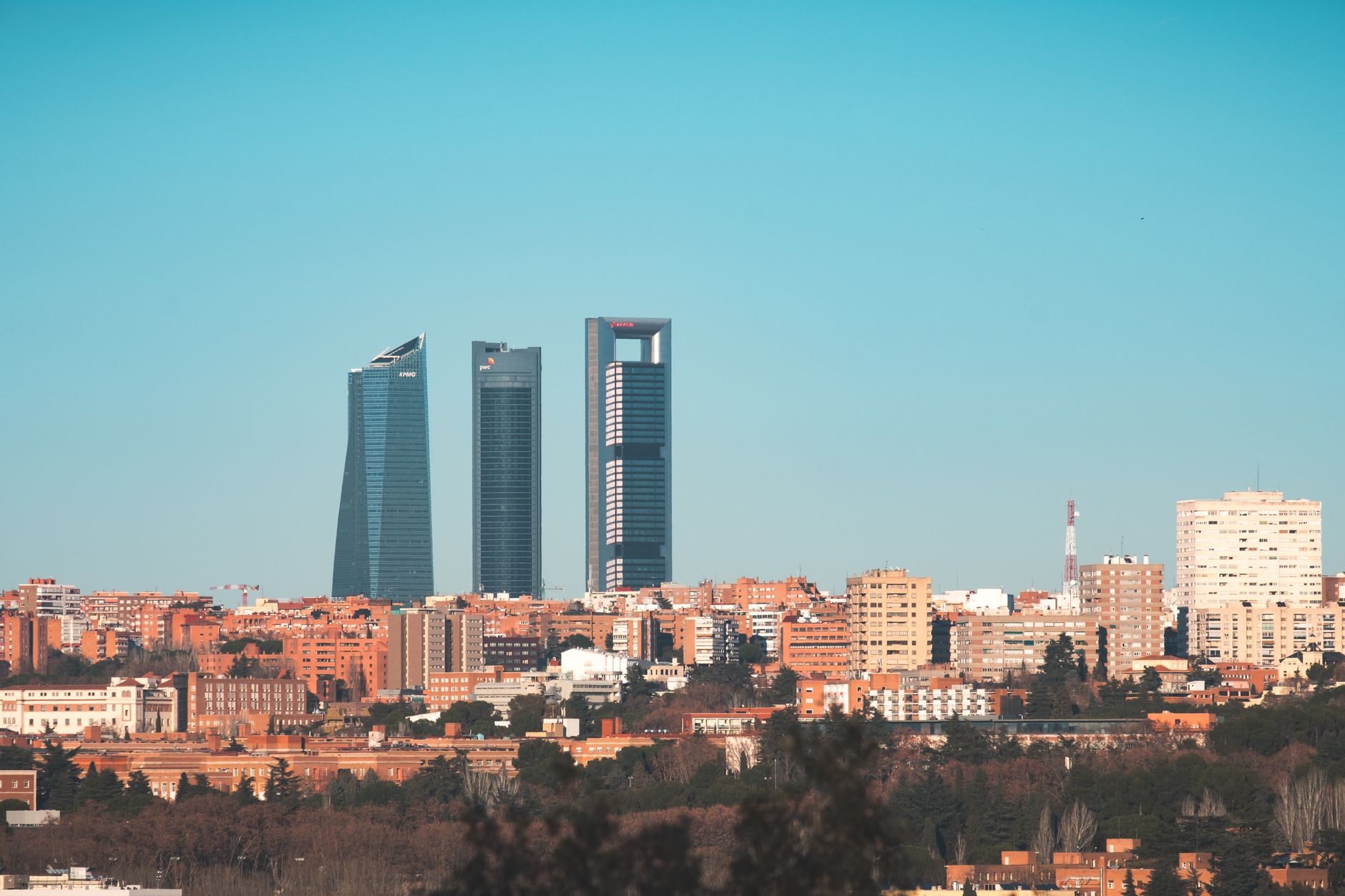
Madrid's financial district has never been more expensive—or more anxious about its workforce. Over the past eighteen months, rental prices in coveted neighbourhoods like Salamanca and Chamberí have surged beyond €2,000 monthly for modest two-bedroom apartments, while grocery costs and transport expenses have climbed steadily. The pressure is forcing a reckoning in how local businesses attract and retain talent.
"We're seeing a fundamental shift," says a senior recruiter at a major staffing agency based on Paseo de la Castellana, Spain's financial spine. Companies that once competed purely on career prospects now face candidates asking bluntly: will this salary actually cover my life here? The answer, increasingly, is no—and businesses are losing people because of it.
Data from Madrid's chamber of commerce suggests that mid-level professionals in tech, finance, and consulting roles now require salaries 18-22% higher than five years ago just to maintain the same standard of living. A software engineer earning €45,000 annually can no longer afford a one-bedroom flat in central Madrid without dedicating 40% of gross income to rent alone—well above Spain's recommended threshold.
The consequences ripple across the talent market. Tech startups clustered around the innovative hubs of Malasaña and Chueca report difficulty filling mid-management roles. Banking institutions near Atocha have begun offering remote-work arrangements and relocation subsidies to candidates unwilling to base themselves permanently in the capital. Some firms are explicitly directing hires to outlying areas like Getafe or Alcalá de Henares, where housing remains affordable but commute times stretch to ninety minutes.
Compounding the squeeze: young professionals are voting with their feet. LinkedIn data shows a noticeable uptick in Madrid professionals accepting positions in Barcelona, Valencia, and increasingly, Lisbon—where salaries often match Spanish levels but living costs remain 15-20% lower. The brain drain threatens Madrid's identity as Spain's premier business hub.
Forward-thinking companies are adapting: some now offer flexible working arrangements, housing allowances, or equity stakes to offset salary constraints. Others have established satellite offices in cheaper neighbourhoods to reduce overhead while bringing employees closer to home. Yet traditional corporate structures remain largely unchanged, betting that Madrid's magnetism will overcome economic friction.
The question haunting Madrid's business establishment is whether that bet will hold. Without structural changes—either meaningful salary increases or policy interventions on housing—the city risks ceding its talent advantage to competitors willing to adapt faster. For now, the market remains in flux, with both employers and workers gambling on whether the capital's allure will ultimately prove worth the price.
This article was compiled by AI from the sources linked above and screened before publishing. See our editorial standards.