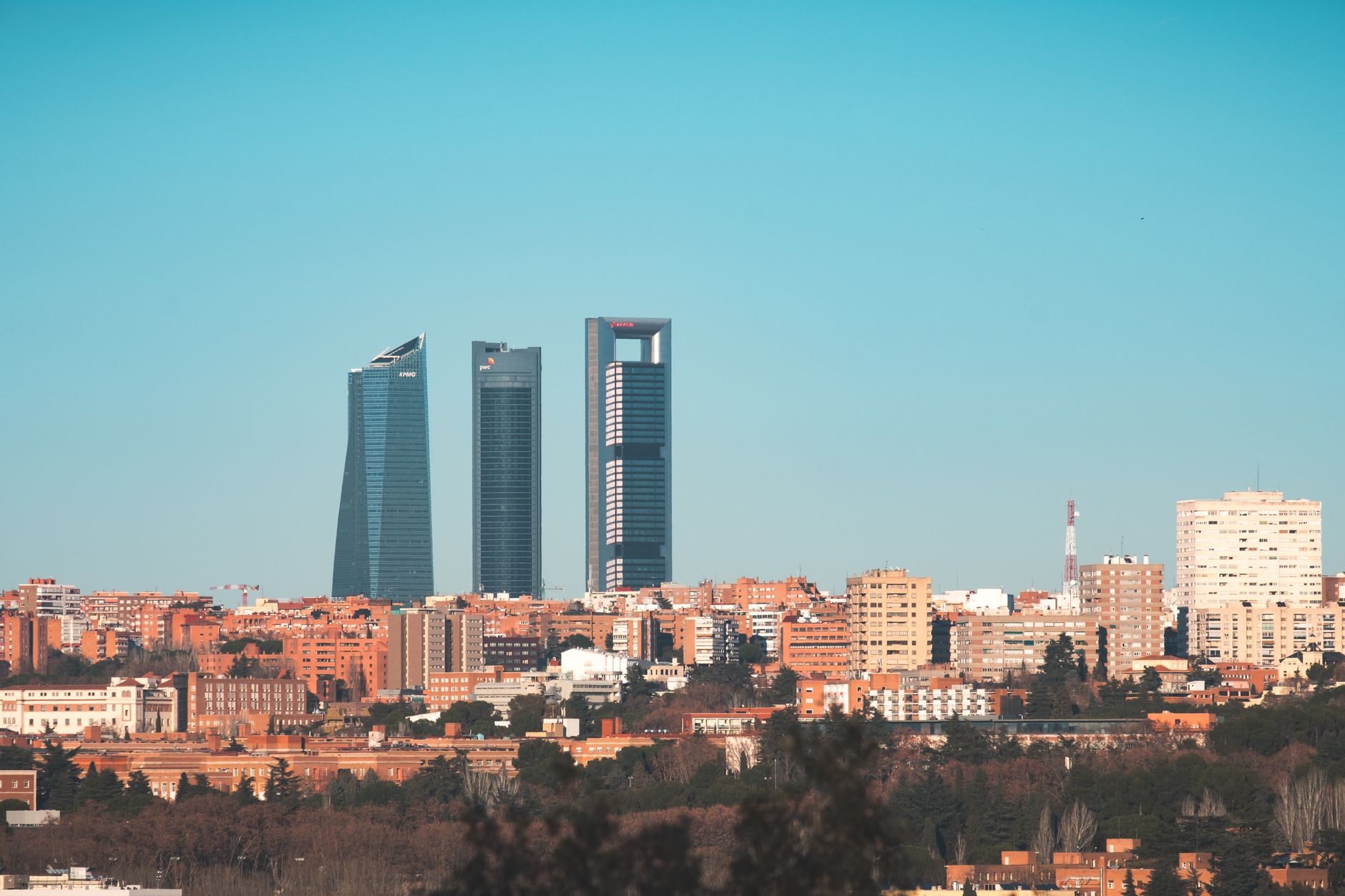
The gleaming office towers along Paseo de la Castellana tell one story about Madrid's financial prowess. But behind the glass facades of BBVA's headquarters and the trading floors dotting the Barrio de Salamanca, a grimmer narrative is unfolding this year: the sector is being squeezed from every direction.
Commercial office rents in Madrid's prime financial districts have climbed nearly 12 percent since early 2025, with premium space in the Azca complex now commanding €850 per square metre annually—a far cry from the €680 rates firms were paying just three years ago. For investment houses and asset managers with hundreds of employees spread across multiple locations, the mathematics no longer work as comfortably as they once did.
"Our cost base in the capital has become significantly more challenging," explained one senior finance professional at a mid-sized asset management firm operating from Calle Serrano, speaking on condition of anonymity. "Coupled with wage inflation—the best talent expects 8 to 10 percent annual increases—margins are under real pressure."
The headwinds extend far beyond real estate. Energy costs remain elevated, climbing 18 percent year-on-year, while regulatory compliance expenses have surged following new European digital finance directives. Meanwhile, investor appetite for Spanish equities and fixed-income products has cooled considerably. Foreign direct investment into Madrid's finance sector dropped 23 percent in the first quarter compared to 2025, according to preliminary figures from the Madrid Chamber of Commerce.
The broader cost-of-living crisis affecting Madrid's residents—grocery prices up 6.2 percent, metro fares climbing to €1.85 per journey—is trickling up through the ecosystem. Talent retention has become acute. Young analysts and junior traders, earning €28,000 to €35,000 annually, increasingly find that rents in popular neighbourhoods like Malasaña or Chueca consume nearly 40 percent of income, prompting many to decamp to satellite towns or even Barcelona.
Geopolitical uncertainty compounds the problem. Volatility in Middle Eastern markets, unpredictable energy prices, and questions about transatlantic relations under the current U.S. administration have made institutional investors cautious. Spanish asset managers report that fundraising for new vehicles is taking 30 to 40 percent longer than it did eighteen months ago.
Yet Madrid's finance sector remains resilient. The city continues to attract fintech startups and international banking operations seeking European footholds. Still, for traditional investment firms navigating 2026, survival increasingly means doing more with less—or relocating operations to cheaper European cities.
This article was compiled by AI from the sources linked above and screened before publishing. See our editorial standards.