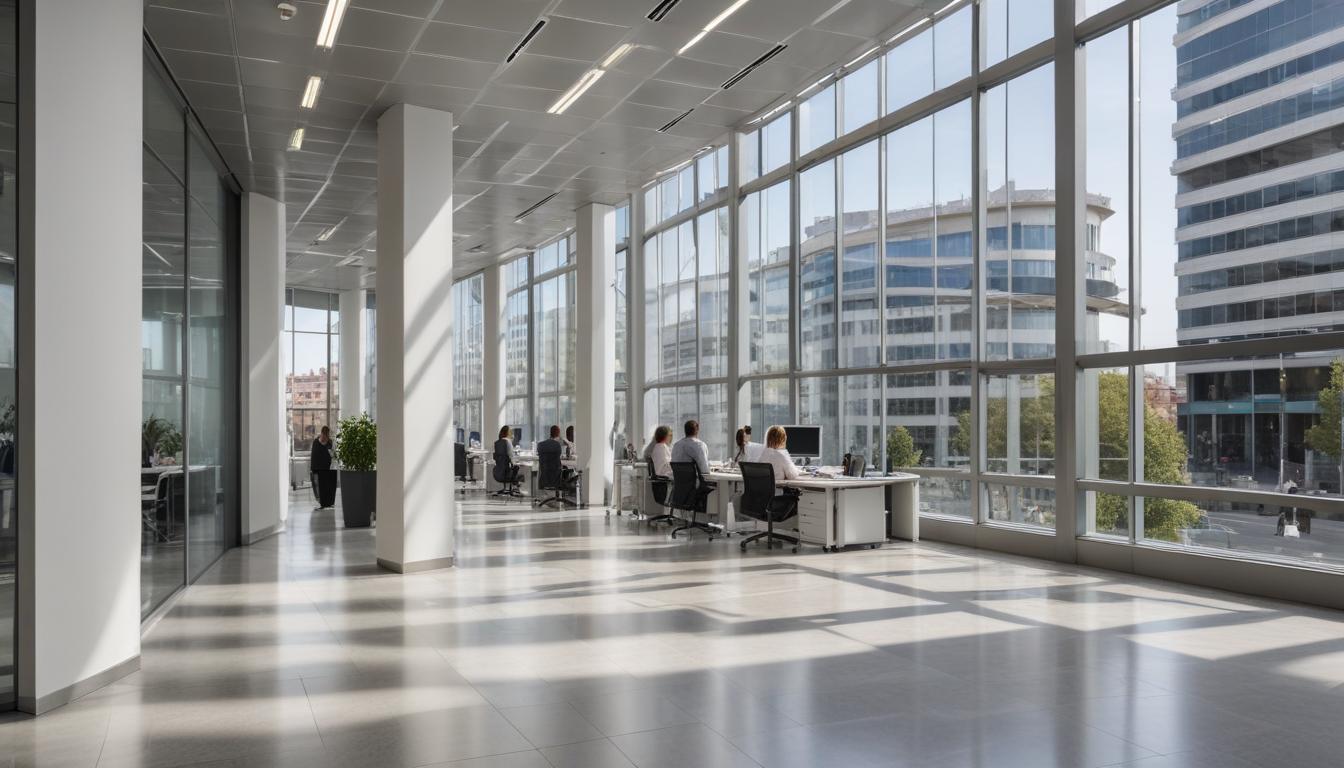
For decades, Madrid's commercial property market orbited a familiar axis: Paseo de la Castellana, the financial district, and a handful of prestige addresses in Chamberí. In 2026, that gravitational centre is fragmenting—and the consequences for how the city's talent finds work are profound.
Recent data from Madrid's Chamber of Commerce shows office vacancy rates in traditional financial zones have climbed to 16 per cent, the highest in a decade, while demand for flexible workspace has surged 34 per cent year-on-year. Major tech firms and consulting groups are abandoning long-term leases on Paseo de la Castellana in favour of distributed office models across neighbourhoods like Malasaña, Salamanca, and even emerging tech hubs near Atocha station.
"The old Madrid office market was hierarchical—you worked downtown or you commuted," explains the broader structural shift visible across the city's commercial landscape. Today's reality is messier and more diffuse. Companies are leasing smaller footprints across multiple locations, creating what property consultants call "activity-based working" clusters.
This trend is reshaping talent acquisition and retention in unexpected ways. Junior professionals no longer face a binary choice between a Castellana skyscraper or unemployment. A graduate hired by a mid-tier consulting firm might work Mondays and Thursdays at a shared workspace on Calle Fuencarral in Malasaña, eliminating the €800 monthly metro-to-office commute from peripheral neighbourhoods like Torrejón or Alcalá de Henares. Suddenly, living outside the M-40 motorway belt becomes genuinely viable.
Property investors are responding. Commercial rents in secondary neighbourhoods have risen 8-12 per cent annually since 2024, while premium Paseo de la Castellana properties have stagnated. Landlords are retrofitting outdated office stock into "micro-office" configurations—150 to 300 square-metre units—that appeal to startups and remote-first companies.
The talent implications are significant. Madrid's ability to attract workers from Barcelona, Valencia, and beyond improves when job accessibility isn't geographically concentrated. Firms report faster hiring cycles and lower attrition when employees have flexible location options. Yet this fragmentation also creates new inequalities: workers without reliable home internet or those managing childcare find the distributed model less forgiving than traditional office anchors.
By late 2026, Madrid's commercial property market looks less like a monolithic financial centre and more like a networked city. Where people work increasingly determines where they live—and that realignment is accelerating faster than policymakers anticipated.
This article was compiled by AI from the sources linked above and screened before publishing. See our editorial standards.