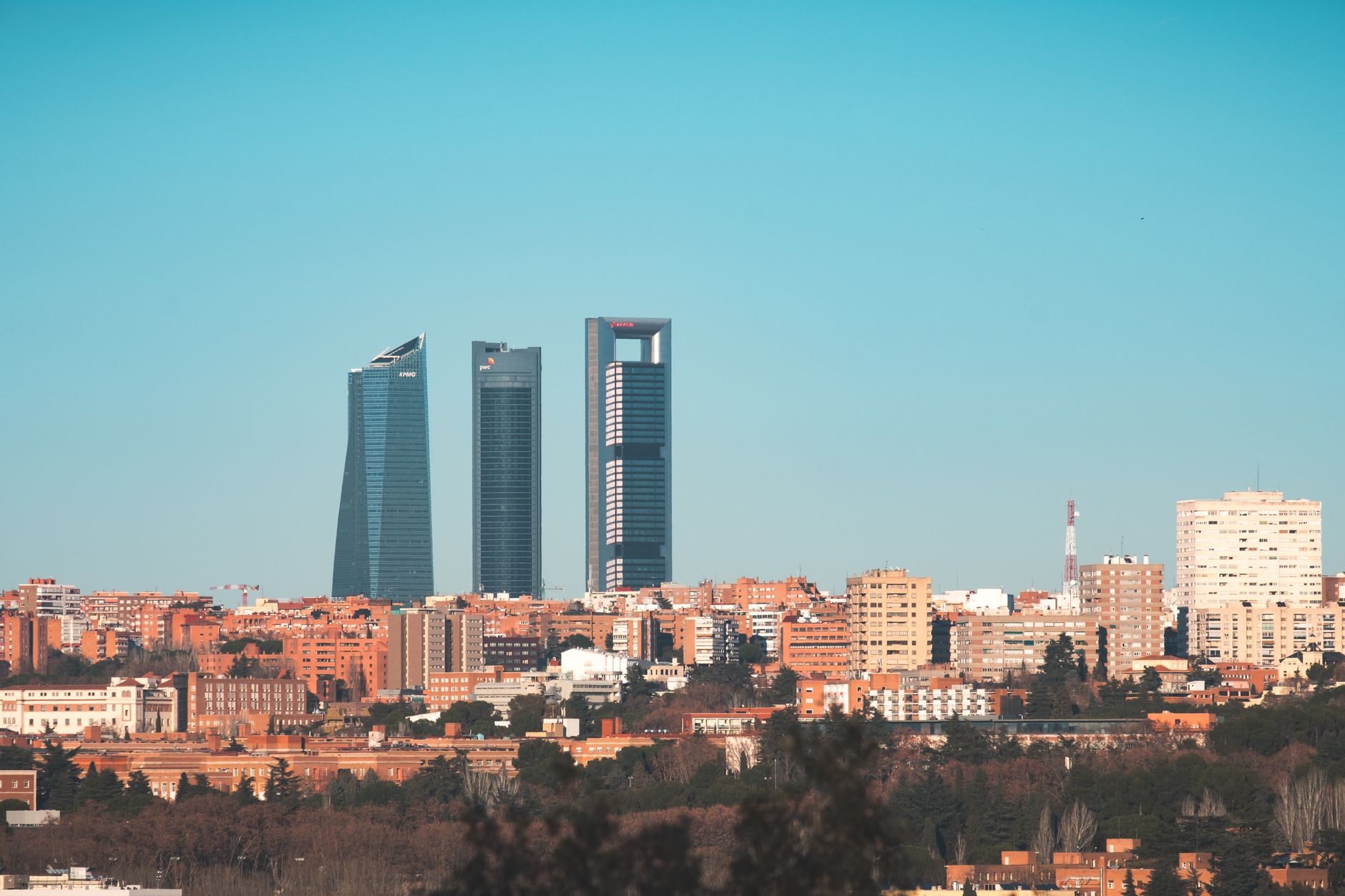
Madrid's employment landscape is undergoing a seismic shift. Walk through the gleaming office parks of Chamartín or the traditionally bustling corridors of the Financial District along Paseo de la Castellana, and you'll notice a recurring pattern: half-empty floors and hiring freezes. Meanwhile, neighbourhoods like Móstoles, Torrejón de Ardoz, and Alcalá de Henares are experiencing unprecedented demand for skilled workers.
The transformation reflects a broader trend accelerating across Europe's major economies: the permanent dislocation of work from city centres. In Madrid's case, the shift is being driven by two converging forces—hybrid work adoption and the rising cost of premium office space. Central Madrid rents have climbed to €28-32 per square metre monthly, pricing out mid-sized firms that once anchored the capital's employment ecosystem.
"We're seeing a fundamental restructuring," explains the Madrid Chamber of Commerce's latest quarterly employment report. Tech companies, which once clustered around the barrio de Salamanca and Atocha, are increasingly establishing satellite offices in lower-cost zones. A major fintech recruiter recently moved its hub to the Torrejón Business Park, cutting office costs by 40 per cent while expanding its workforce from 180 to 420 employees within eighteen months.
The consequences ripple outward. Commercial real estate agents report that Grade-A office space in central Madrid has sat vacant longer than any point since 2009, while industrial zones near the M-50 motorway are experiencing their tightest occupancy rates in a decade. Simultaneously, unemployment in peripheral municipalities has fallen below Madrid's citywide average for the first time in modern records.
For job seekers, the implications are mixed. Workers in inner-city neighbourhoods face longer commutes—the average journey from central Madrid to Alcalá de Henares consumes ninety minutes daily on public transport. Yet wage premiums for roles in these new employment hubs have risen 8-12 per cent to compensate for relocation friction. Meanwhile, younger professionals and families are discovering previously overlooked areas like Fuenlabrada and Getafe offer reasonable rents and proximity to employment.
The talent market has become genuinely bifurcated. Senior roles and strategic functions remain concentrated in central Madrid's premium zones, while operational, technical, and support positions have dispersed across the metropolitan region. Recruitment agencies now specialise by geography rather than sector—a practical adaptation to Madrid's new employment reality.
As this devolution continues, the question facing Madrid's municipality becomes urgent: how to manage infrastructure demands in boom zones while stabilising the economic footprint of the historic centre. The city's job market isn't shrinking—it's relocating.
This article was compiled by AI from the sources linked above and screened before publishing. See our editorial standards.