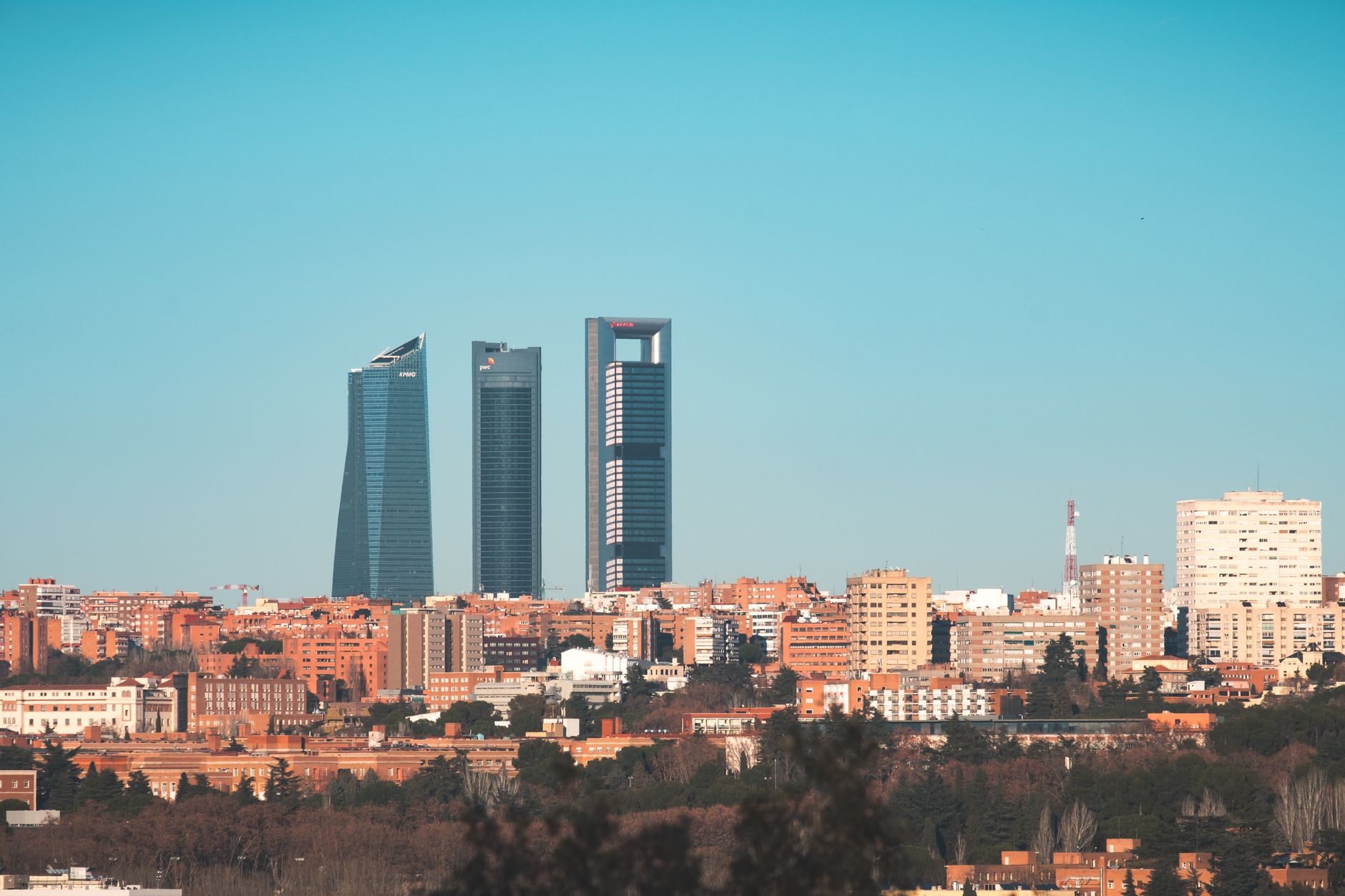
Madrid's employment landscape is undergoing a subtle but significant shift. While headline unemployment figures remain stable at around 11.2%, the city's job market is increasingly bifurcating—and shrewd professionals are capitalizing on emerging opportunities that traditional recruiters are only now beginning to recognize.
The catalyst is clear: multinational technology companies, from data infrastructure firms to enterprise software providers, are consolidating Spanish operations in Madrid rather than spreading them across Barcelona or Valencia. This concentration is creating a secondary wave of demand for specialized roles that rarely appear in mainstream job boards.
Consider the transformation along the Paseo de la Castellana corridor. Once dominated by conventional corporate offices, the avenue now hosts regional headquarters for cloud services providers and digital transformation consultancies. Real estate agents report that office space in this zone commands €22-28 per square metre annually—a 15% premium compared to 2024, yet tenants continue to commit to multi-year leases.
The beneficiaries aren't necessarily the traditional workforce. Instead, three cohorts are capturing disproportionate gains. First, experienced mid-career professionals pivoting from finance or telecommunications into data governance and cybersecurity roles—positions offering salaries between €55,000 and €85,000, significantly above Madrid's median professional salary. Second, technical freelancers operating from neighbourhoods like Malasaña and Chueca, where co-working spaces now charge €350-450 monthly for hot-desking, are finding sustained contract work from these firms. Third, professionals with bilingual capabilities (Spanish-English or Spanish-German) are discovering that their language skills, combined with technical competence, command substantial premiums in a city that remains Spain's capital for international business operations.
The Cámara de Comercio de Madrid reported in its latest quarterly survey that 43% of member companies plan to expand headcount in 2026, up from 31% in early 2025. However, hiring is concentrated in specific sectors: cloud infrastructure, regulatory compliance technology, and customer data platforms. Traditional administrative and back-office roles continue to face automation pressures.
What makes this moment distinctive is timing. The transition hasn't yet saturated local talent markets, yet infrastructure—reliable broadband, professional venues, established business networks centred around Plaza Castilla—already supports it. For professionals willing to retrain or reposition their existing expertise, Madrid's job market is offering rare combinations of stability and advancement.
The window, however, is finite. Competitive talent from Barcelona and international candidates are increasingly aware of these opportunities. Early movers—those already establishing themselves in these emerging roles—have captured the advantage. Stragglers may find the landscape considerably more crowded within eighteen months.
This article was compiled by AI from the sources linked above and screened before publishing. See our editorial standards.