Madrid's Office Market Faces Perfect Storm of Headwinds in 2026
Rising interest rates, hybrid work persistence, and oversupply are forcing landlords and developers to rethink their strategies across the capital's premium business districts.
Rising interest rates, hybrid work persistence, and oversupply are forcing landlords and developers to rethink their strategies across the capital's premium business districts.
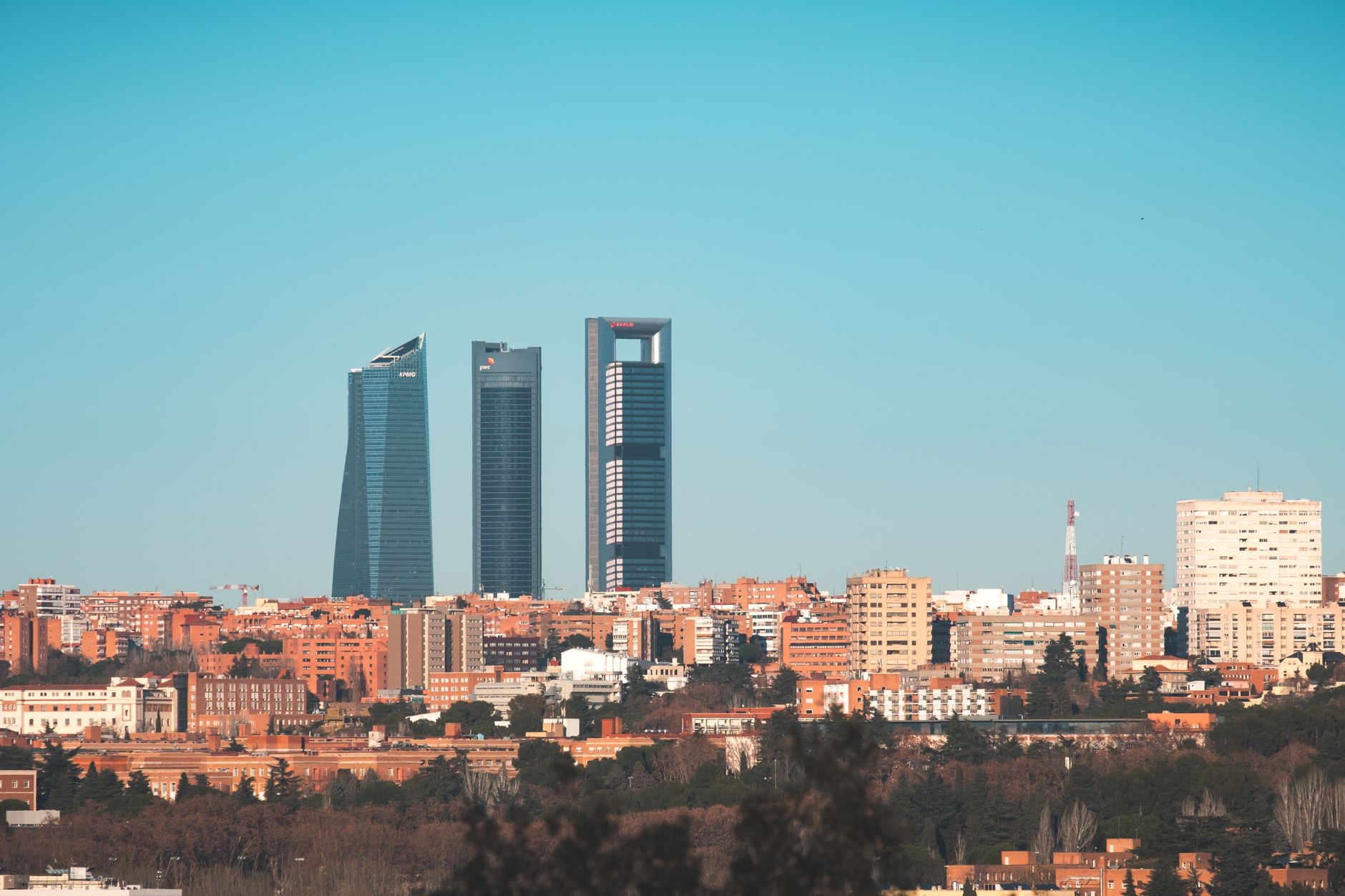
Madrid's commercial property sector is grappling with a confluence of challenges that have fundamentally altered the landscape for office space, with vacancy rates climbing and rental values under sustained pressure across the city's most prestigious business hubs.
The once-booming markets around Paseo de la Castellana and the Cuatro Torres Business Area are confronting an uncomfortable reality: the post-pandemic workplace has not snapped back to pre-2020 patterns. Even as the broader Spanish economy shows resilience, Madrid's office market is absorbing the consequences of three years of aggressive hybrid work adoption. Current vacancy rates in prime central locations have reached approximately 12-14%, a significant jump from the 8% baseline seen in early 2024, according to commercial real estate analysts tracking the Chamberí and Salamanca districts.
Interest rate persistence presents another acute challenge. While European Central Bank signals suggest potential relief in late 2026, borrowing costs remain elevated, constraining developer financing and investor returns. Cap rates on Madrid office buildings have compressed, with yields hovering around 3.8-4.2% in premium zones—tight margins that leave little room for error when tenant retention becomes unpredictable.
The hybrid phenomenon has proven stubbornly resistant to reversal. Major multinational corporations and Spanish firms alike continue downsizing their footprints in expensive central locations, opting instead for flexible workspace arrangements or relocation to secondary nodes like the Zona de Desarrollo Empresarial near Plaza Castilla. This structural shift is particularly evident among tech and financial services companies, traditionally heavy office users.
Supply-side pressures compound these difficulties. Several speculative office developments completed in 2024 and 2025 are still seeking tenants, creating competitive pricing pressure across premium stock. Meanwhile, conversion projects transforming older office buildings into residential or mixed-use spaces in neighborhoods like Arganzuela suggest landlords are increasingly willing to abandon the traditional office model altogether.
Transaction volumes have cooled noticeably. Investment in Madrid office properties declined 18% year-on-year through the first half of 2026, with international institutional capital growing more cautious. Domestic buyers and REITs remain active, but selective, favoring assets with strong ESG credentials and located in regenerating neighborhoods rather than established business cores.
Yet not all segments face uniform distress. Well-maintained, energy-efficient buildings with flexible floor plates and strong public transport connectivity—particularly properties near Metro hubs in Sol, Gran Vía, and Atocha—maintain rental resilience. The flight to quality continues, leaving older, less adaptable stock vulnerable to prolonged vacancy and value erosion.
For Madrid's real estate sector, 2026 represents a reckoning. The easy expansion years have ended, forcing rigorous reassessment of asset strategies and fundamental assumptions about how the capital's offices will function in a permanently transformed workplace.
This article was compiled by AI from the sources linked above and screened before publishing. See our editorial standards.
How does this story make you feel?
Spread the word
About this article
Published by The Daily Madrid
Daily brief
Free, in your inbox before 7am. Weekdays.
More in Business