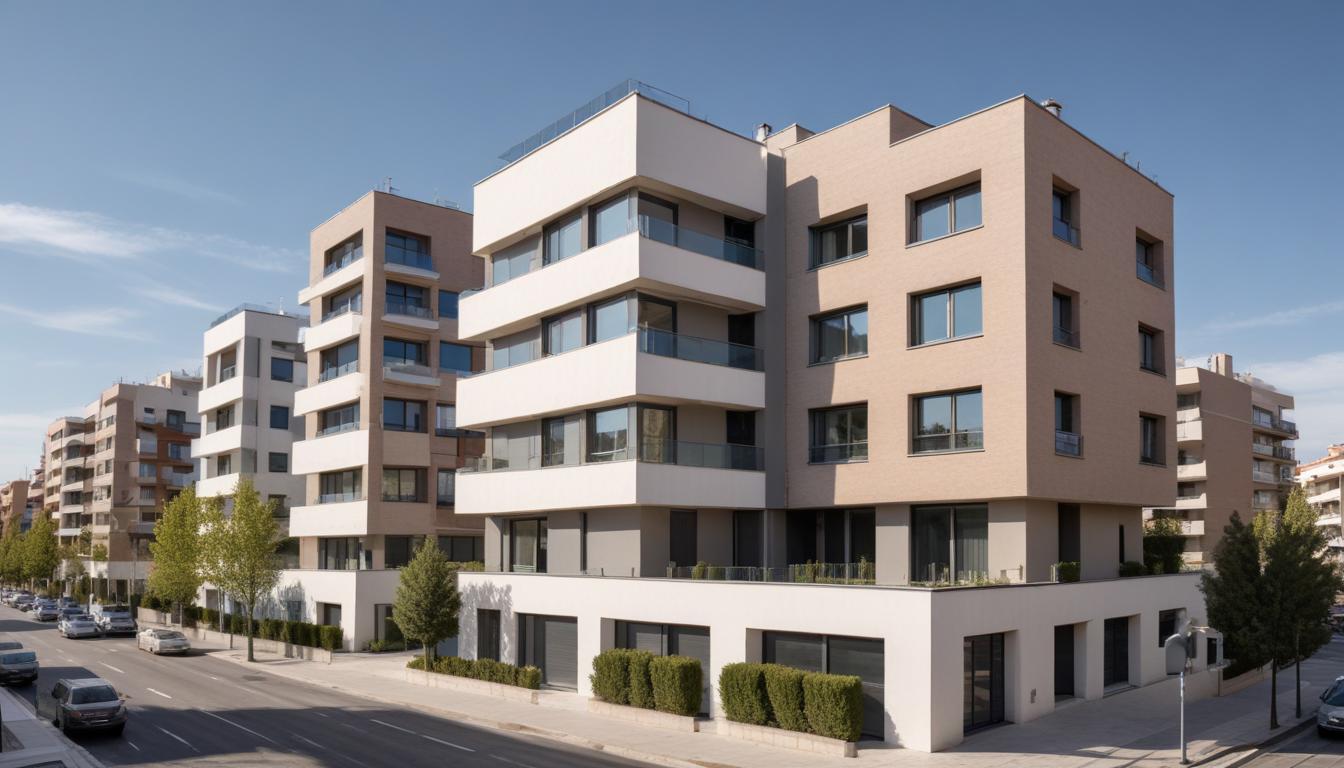
Madrid's social housing sector is attracting institutional capital in earnest, and the numbers suggest why. While conventional residential yields across Salamanca and Chamberí hover near 3–3.5% annually, social and affordable housing portfolios managed through approved vehicles are posting 4–4.8% returns—a gap wide enough to move capital.
The shift is tangible on the ground. Vallecas, historically Madrid's affordability frontier, has become a testing ground. Operaciones de transformación urbana (urban renewal operations) along the Paseo de la Dirección and near metro Entrevías have drawn commitments from both public agencies and private investors seeking stable, long-duration leases. A recent social housing development in Carabanchel, offering studios and one-beds at €450–550 monthly, achieved full pre-leasing within weeks—a rarity that caught institutional attention.
What's driving the yield premium? Partly, certainty. Social housing contracts in Spain now typically lock in 15–20 year terms with guaranteed occupancy rates. Unlike speculative BTL (buy-to-let) in Malasaña or Chueca—where gentrification pressures create volatility—affordable rental streams are regulated and predictable. Madrid's recent expansion of the Vivienda Joven programme, which subsidises first-time buyers under 35, has also bolstered demand fundamentals.
The policy backdrop matters enormously. The Madrid regional government's commitment to adding 10,000 social units by 2027, coupled with municipal incentives like reduced IBI (property tax) for qualifying developments, has lowered capital costs for developers. Those savings translate to yield visibility investors crave.
Yet reality is more nuanced than headlines suggest. Average Madrid property prices remain at €4,500 per square metre citywide, creating a fundamental affordability gap that even subsidised rents can't fully bridge for lowest-income households. A €550 monthly rent requires gross income of €1,650—still beyond reach for precarious workers. Yields matter less if the product doesn't serve those who need it most.
Neighbourhood variation is stark. Vallecas social housing achieves higher occupancy and lower turnover than equivalent schemes in peripheral areas like San Blas, where transport connectivity remains a constraint. Investors are learning that location—even within the affordable segment—matters for performance.
The honest assessment: Madrid's social housing yields are real, sustainable, and increasingly competitive with traditional residential. But they're solving a specific problem—housing young professionals and stable low-to-middle earners—not the deepest affordability crises. That will require different vehicles: deeper subsidies, cross-subsidy models, or co-operative structures. For now, investors have found a lane. Whether it widens to reach those most in need remains the city's harder question.
This article was compiled by AI from the sources linked above and screened before publishing. See our editorial standards.